In the competitive business landscape of 2026, the difference between companies that thrive and those that merely survive lies in their ability to structure chaos. For any business owner or manager, time is the scarcest and most valuable resource. Yet, many organizations operate in a state of constant reaction, where leaders spend their days putting out fires instead of building the future. The solution to this problem is not working longer hours, but rather implementing robust business systems that automate, simplify, and bring consistency to daily operations.

A business system is a set of repeatable and documented processes that enable an organization to function with technical precision, regardless of who is in charge at any given time. By systematizing, knowledge ceases to reside solely in the minds of employees and becomes part of the company’s DNA.
Standardization: The foundation of efficiency
The foundation of any smooth operation is standardization. When every task, no matter how small, has a defined method for execution, variability decreases and quality increases. Business systems allow for the creation of what are known as Standard Operating Procedures (SOPs).
Imagine a daily operation where every employee knows exactly what steps to take when receiving an order, how to handle a complaint, or how to close the cash register. This eliminates the need for constant supervision and drastically reduces human error. In a systematized environment, training new employees becomes an accelerated and efficient process, as there are clear manuals and workflows to guide them. Standardization doesn’t stifle creativity; on the contrary, it frees the team from trivial decisions so they can apply their talents to areas that truly generate value.
Automation: Turning hours into minutes
One of the cornerstones of daily optimization is technological automation. Today, systems exist for almost every business function, from marketing to accounting. The impact of these systems on daily operations is revolutionary.
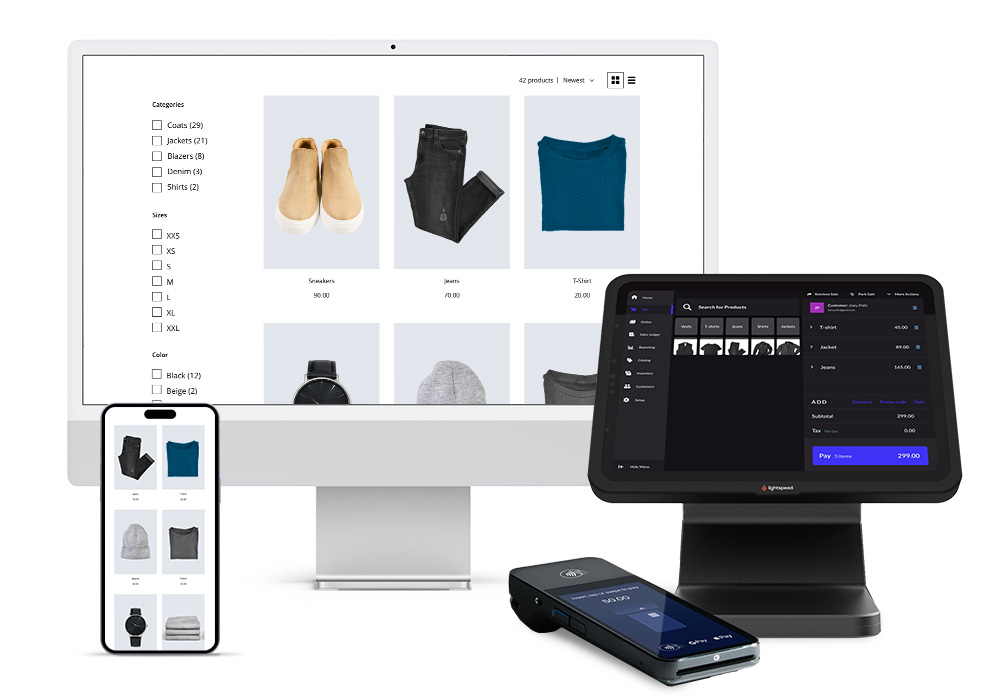
Let’s take inventory management as an example. An automated system can track every sale in real time, update stock levels, and issue automatic purchase orders when supplies reach a critical level. Without this system, an employee would have to perform manual counts, which is not only time-consuming but also prone to errors that can halt production or sales.
Automation also extends to customer communication. Customer relationship management (CRM) systems can automate email follow-up, appointment scheduling, and audience segmentation. This ensures that no potential customer is missed, improving conversion rates without increasing the sales team’s workload.
Information flow and data-driven decision making
A common problem in unsystematized companies is the “information silo,” where each department knows what it does, but no one has the complete picture. Modern business systems, such as ERP (Enterprise Resource Planning), integrate all facets of the company into a single source of truth.
When information flows seamlessly between sales, finance, and operations, daily efficiency skyrockets. Managers can access dashboards that display key performance indicators (KPIs) in real time. Are profit margins declining today? Is there a supply chain delay that will affect tomorrow’s deliveries? With the right systems, these questions can be answered in seconds. The ability to make informed and rapid decisions is what allows a company to be agile and adapt to market changes ahead of its competitors.
Improved collaboration and reduced unnecessary meetings
Much of the productive time in an office is lost in meetings meant simply to “catch up” or clarify who’s doing what. Project and task management systems eliminate this need by providing a centralized collaboration platform.
By using systems where tasks are assigned, with clear deadlines and attachments accessible to everyone involved, communication noise is reduced. Employees can see their colleagues’ progress and understand how their work fits into the overall picture. This not only streamlines operations but also improves team morale by reducing frustration stemming from a lack of clarity and conflicting instructions.
Customer experience as a result of internal efficiency
Systems are often thought of as solely for internal benefit, but the customer is the ultimate beneficiary. Streamlined daily operations translate into faster response times, on-time deliveries, and consistent service.
When a business system functions correctly, the customer receives the same quality of service regardless of whether they are served by the owner or a new employee. This predictability builds trust. For example, in the service industry, a system that sends automatic appointment reminders and post-service satisfaction surveys demonstrates professionalism and attention to detail—factors that are difficult to maintain manually as the business grows.
Reduction of operating costs and scalability
Inefficiency is costly. Every minute an employee spends searching for a lost file or correcting a billing error is money out of the company’s pocket. By optimizing daily operations, business systems reduce fixed costs and improve profit margins.
Furthermore, systems are key to scalability. If a process requires the business owner to be present to function, that business will never be able to grow beyond that person’s physical capabilities. Systems allow you to replicate success. If you have an operating system that works in one store, you can use that same “instruction manual” to open a second, third, or tenth location with a much higher probability of success.
Implementing business systems is not a one-time task, but rather a process of continuous improvement. However, the initial effort is more than compensated for through smoother, more productive, and more profitable daily operations. A well-systematized business is an asset that works for its owner, instead of the owner being a slave to the business.
By delegating repetitive tasks to technology and operational decisions to proven processes, business leaders can finally reclaim their time and focus on what truly matters: innovation, strategic growth, and customer satisfaction. Ultimately, a business is only as strong as the systems that support it.